
I first traveled to Almaty in 1998 as a very young investment banker keen to research a complex deal (they were never easy) related to a cross-border gas pipeline between Kazakhstan and China. This was before China’s Belt and Road Initiative took off, but was an early sign of what was coming. GDP in Kazakhstan was $22 billion at the time. Today it is 10x, around $240 billion.
It was clear then that energy was at the top of many investors’ lists. But the opportunities I saw on that trip, and subsequent trips, were far more diverse.
By 2015 I began to see Central Asia through a development lens and wrote the following:
Despite its natural wealth and historical location as a crossroads, Central Asia remains stunted by income inequality and lack of advanced educational attainment–two areas, I would argue, which hold the key to the Great Game. This is because the success of any New Silk Road will likely require far more than the odd gas pipeline or wad of investment dollars but rather a level of development that enhances economic inclusion and can foster political and social stability, open borders, and diversified economic growth. In this sense, a single aspect of Central Asia which has been largely discounted must now be confronted: the education of its people
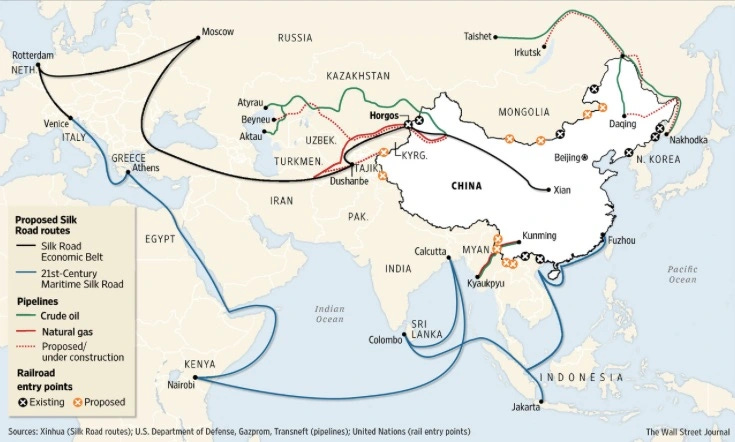
Today, this region has indeed begun to focus on human rather than natural resources, with implications for both investment and geopolitics.
Here are a few trends that are shaping the region.
English
- Low but Rising Proficiency: Central Asia’s English proficiency remains among the lowest globally, but is steadily improving. In 2024, Kazakhstan ranked 103rd out of 116 countries in the EF English Proficiency Index, while Uzbekistan and Kyrgyzstan also placed in the bottom quartile. The urban-rural divide explains a lot of this, as urban centers have better access to English education and resources.
- Strategic Investment: Governments are investing in national programs (e.g., Kazakhstan’s “English for the Future,” Uzbekistan’s “Future English”) to upgrade teacher training, curriculum, and school resources. In Uzbekistan, iTEP International is testing teachers, civil servants students as part of larger government programs focused on English proficiency (full disclosure: I’m CEO at iTEP).
- Professional Up-Skilling: Initiatives like the U.S.-funded C5+O.N.E. program have trained over 1,700 economic development professionals in English to foster regional collaboration and economic ties with the U.S. In my opinion, this is also a bright spot in US foreign policy at a time of retreat.
International Mobility
- Outbound Study: Central Asian students are increasingly pursuing higher education abroad, especially in China, Russia, Europe, and Turkey. Academic mobility is a key focus of government policy: Kazakhstan and Uzbekistan both signed new agreements to boost student and faculty exchanges this year.
- Regional Integration: Partnerships with China, Korea, and the EU are expanding opportunities for technical, vocational, and STEM education, including joint degree programs and scholarships. Notably, Russia, the last overlord of the region, is increasingly being left behind.
Diversified Geographic Ties
- New Roads: Central Asian countries are actively diversifying their economic and diplomatic relationships. While China is now the largest trading partner for Kazakhstan, Uzbekistan, Kyrgyzstan, and Turkmenistan, the region is also deepening ties with the EU, Turkey, and the Middle East67.
- New Trade Corridors: Major infrastructure projects—such as the China-Kyrgyzstan-Uzbekistan railway—are reshaping regional connectivity, reducing dependence on traditional routes, and opening new trade corridors to Europe and South Asia.
Capital and Technology Investment
- Belt and Road: China remains the pivot in the regions investment growth. China’s cumulative investment in Central Asia surpassed $30 billion by 2024, with bilateral trade reaching a record $94.8 billion—over 200 times higher than in 199268.
- Renewable Trends: Investment is expanding beyond energy into renewables (e.g., Kazakhstan’s Zhanatas wind farm), digital infrastructure, and startup ecosystems. Uzbekistan has launched a co-funding mechanism that matches foreign venture capital for local startups and created new legislative frameworks to attract tech investment.
- European and Multilateral Funding: The European Bank for Reconstruction and Development (EBRD) doubled its investment in Central Asia to €2.2 billion in 2024, focusing on infrastructure, trade facilitation, and technology.
- Startup Ecosystems: Uzbekistan is emerging as a regional leader in startup policy, with government-backed venture capital, subsidized infrastructure, and incentives for global accelerator participation.
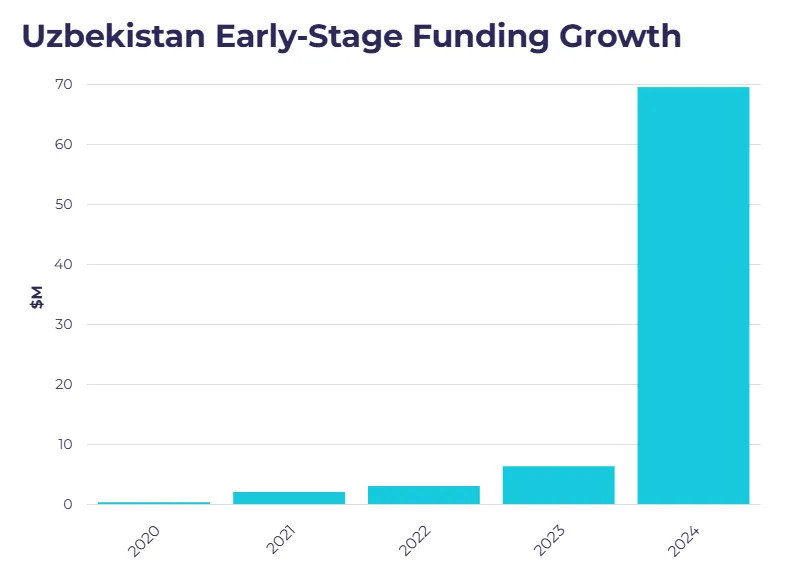
As ever, Central Asia stands at a pivotal crossroads where education, international mobility, diversified partnerships, and targeted investment are beginning to reshape the region’s future. What that future brings is still unclear, but progress is happening fast.
I can already see that the next chapter of the Great Game will be written not just in pipelines and trade routes, but in classrooms, labs, and the ambitions of a new generation. As with so many other countries in Asia and emerging markets, the growth differentiator will be human capital.

 Edunomix